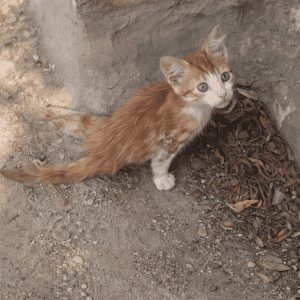
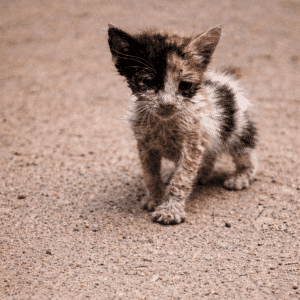
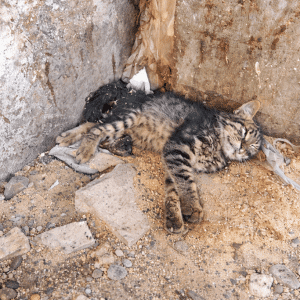
Filippo’s life did not begin in hardship. Once, he belonged to a home, a place where he trusted the people around him and believed he was safe. But when circumstances changed and life became difficult, that sense of security vanished without warning. The people he relied on most made the decision to leave him behind. There was no preparation, no protection—just a sudden return to the streets, where survival depended entirely on instinct.
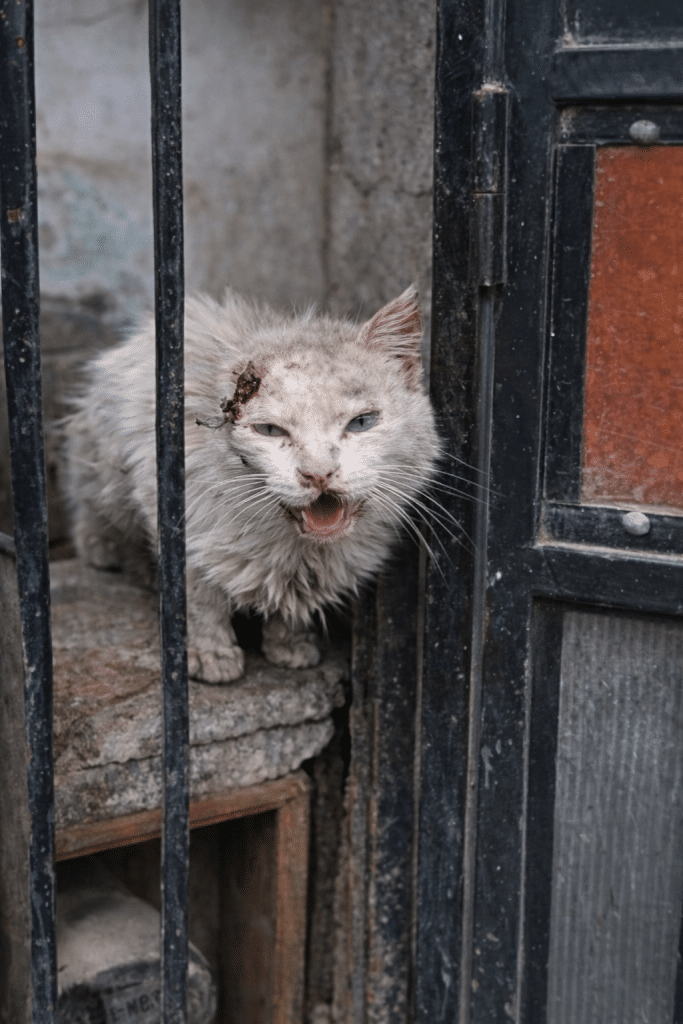
Days turned into weeks under the open sky. Filippo wandered through streets and empty spaces, searching for shade that was never enough and food that rarely came. The sun was relentless, pressing down day after day, offering no mercy. With no shelter and no care, his body slowly weakened. Hunger became constant, exhaustion followed, and the quiet loneliness of abandonment settled deep into his spirit.
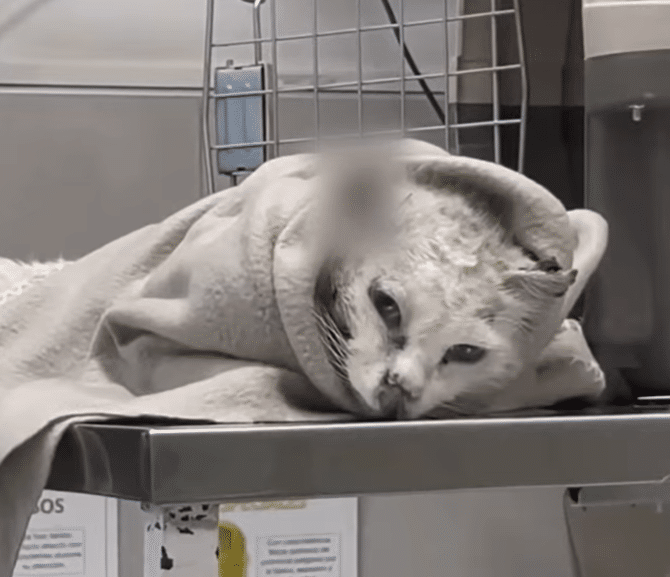
Over time, the damage became impossible to ignore. Prolonged exposure to harsh sunlight took a serious toll on Filippo’s fragile body. His skin began to show visible signs of illness, and what started as irritation gradually developed into something far more dangerous. When a rescue team finally found him, it was clear that his condition had progressed significantly. He was thin, depleted of strength, and his eyes reflected not just physical pain, but emotional exhaustion as well.
Video:
Abandoned with skin cancer, poor cat silently sheds in tears and begs for help
Veterinary examinations confirmed the devastating reality. Filippo was suffering from advanced skin cancer, the result of long-term exposure without protection. The disease had already progressed to a late stage. The news was difficult to hear, especially knowing how different his life might have been if he had never been left behind. Yet even in that moment, the focus shifted from what had gone wrong to what could still be done.
The rescue team faced a compassionate but complex decision. Aggressive treatments would be invasive and stressful, offering little guarantee of improvement. Instead, they chose a different path—one rooted in dignity, comfort, and love. The goal was no longer to fight at all costs, but to give Filippo something he had been denied for far too long: safety, peace, and genuine care.
Filippo was brought into a warm, quiet environment where every detail was designed with his comfort in mind. Soft blankets replaced the hard ground. Nutritious meals arrived regularly, no longer something he had to search for. Gentle hands tended to his skin, applying soothing care that eased irritation and helped him relax. For the first time in a long while, Filippo could rest without fear.
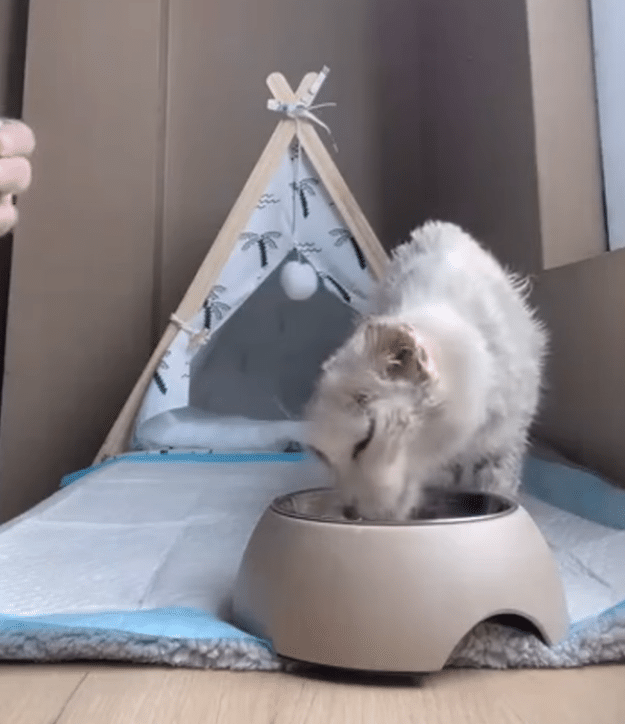
Something remarkable happened during those early days of care. Instead of retreating or remaining distant, Filippo responded. He began eating with more interest, slowly regaining strength. His body, though fragile, showed signs of improvement under consistent attention. His skin reacted positively to treatment, and the constant tension he once carried began to fade.
Even more powerful was the emotional shift. Filippo started to trust again. He leaned into gentle touch rather than pulling away. He sought warmth, comfort, and companionship. The same cat who once survived alone on unforgiving streets now curled up beneath blankets, content and calm. His eyes, once clouded with pain and suspicion, softened with each passing day.
This change wasn’t sudden, but it was steady. Love did not erase his illness, but it transformed his experience of life. Filippo was no longer defined by what he had lost. He was surrounded by people who saw him not as a burden or a hopeless case, but as a life worth cherishing. Each moment became meaningful—quiet naps, warm meals, and moments of connection that filled the space where fear once lived.
Filippo’s story is still unfolding. He has not reached an ending, but rather a chapter filled with peace and hope. The days he lives now are shaped by comfort instead of struggle, by care instead of neglect. He is living proof that even when the body is weak, the spirit can still respond powerfully to kindness.
His journey reminds us of something essential. Love does not always cure illness, but it always has the power to heal in other ways. It restores trust. It brings comfort. It gives meaning to moments that might otherwise be defined by pain. Filippo may have been abandoned once, but he is no longer alone.
Today, he lives wrapped in warmth, surrounded by gentle voices and caring hands. His life, once marked by hardship, is now filled with dignity and affection. Filippo’s story stands as a quiet testament to compassion—a reminder that every creature, no matter their condition, deserves to feel safe, valued, and loved.