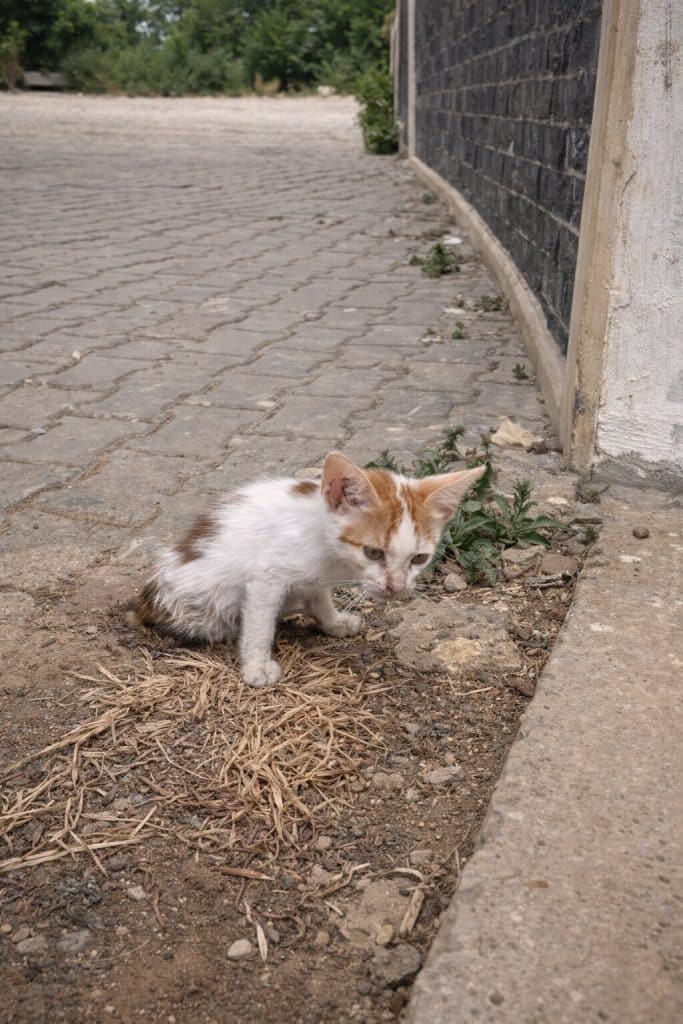
When she was first seen on the street, something was clearly wrong.
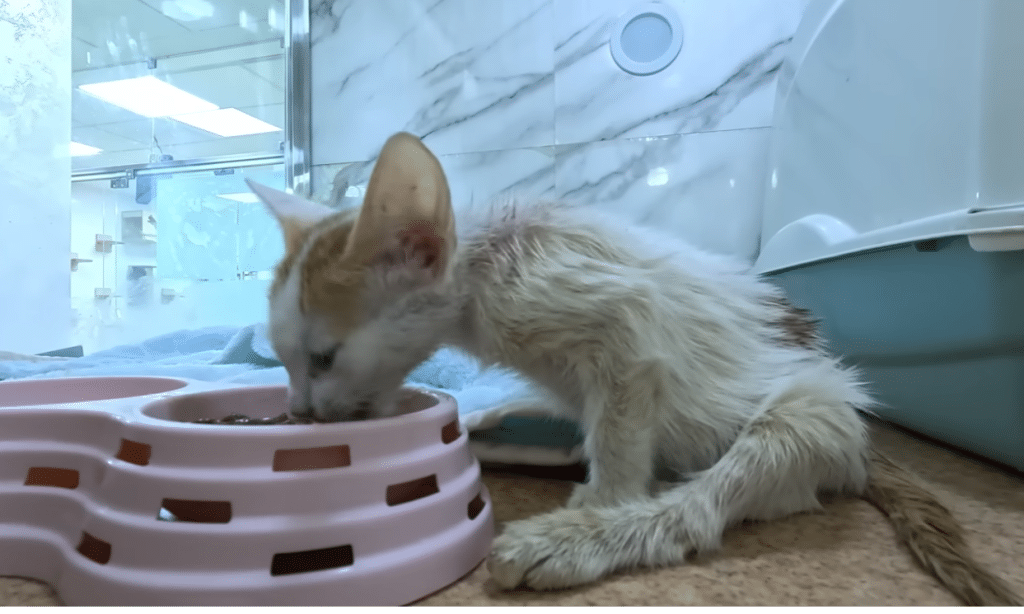
The small white-and-orange kitten lay low to the ground, trying to drag herself forward. Her back legs would not respond. Each movement looked painful. Each attempt to shift position seemed to cost her more strength than she had.
It appeared she may have been struck by a bicycle.
No one knew exactly when.
But it had been long enough for her tiny body to develop a high fever.
And she had been alone the entire time.
Hunger Before Rescue
Before lifting her, the rescuer did something simple.
Food was placed on the ground — for Lizzy and for a nearby black cat who lingered at a cautious distance. Even in distress, Lizzy tried to eat. It was a small but important sign: she still had the will to fight.
Once she finished, she was gently placed into a carrier.
VIDEO: Paralyzed on the Street, Burning With Fever — Watch How Lizzy Refused to Give Up
There was no resistance.
Only exhaustion.
A Diagnosis That Required Immediate Care
Lizzy was brought to see Dr. Rouchdi, who carefully examined her condition.
Her temperature measured 40.1°C — dangerously high for a kitten her size. Further assessment confirmed nerve trauma affecting her lower body. She was unable to control her bowel movements due to the injury.
The trauma had occurred at least a day earlier.
She had endured the pain without medical help until now.
She received injections to reduce infection and inflammation. Her small body was cleaned gently, restoring a sense of comfort and dignity.
This was not a quick fix.
It was the beginning of a long road.
A Clean Space, A Softer Beginning
After stabilization, Lizzy was transferred to a clean shelter environment where she could recover safely.
There, she was given:
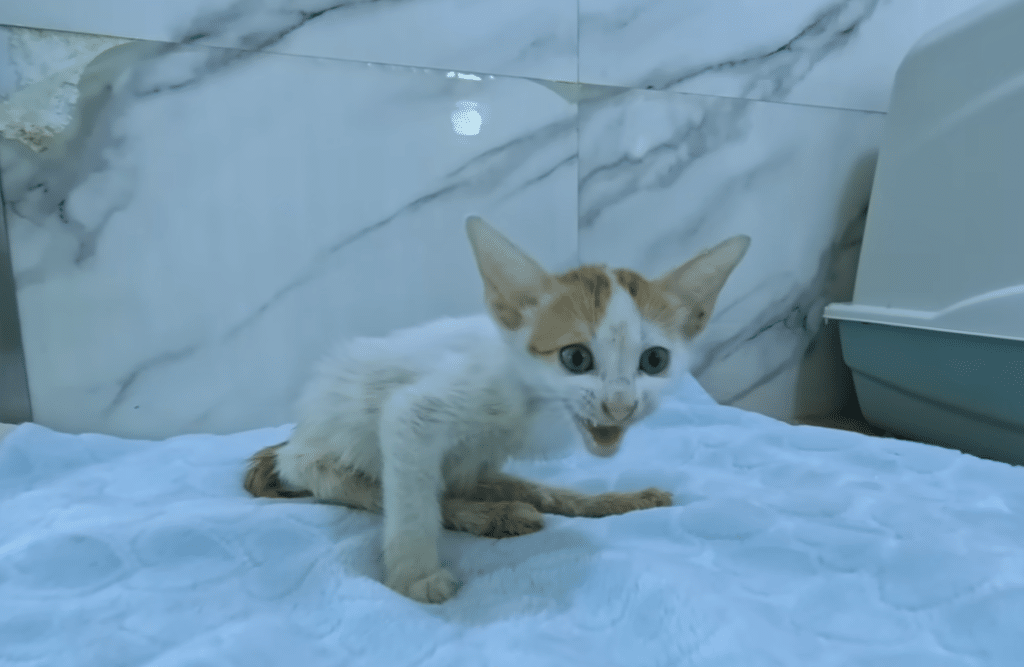
A soft bed.
Nutritious food.
Fresh water.
Quiet surroundings.
Despite her injury, Lizzy remained vocal. She meowed often — not in anger, but as if calling out to stay connected. She attempted to move, adjusting her front paws again and again, determined not to be completely still.
Resilience can live in very small bodies.
Creative Care for a Special Need
Because Lizzy could not control her elimination, caregivers had to adapt.
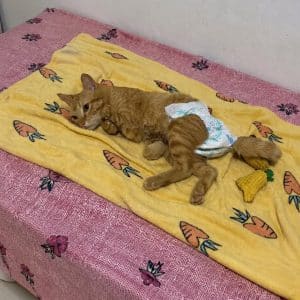
They modified a baby diaper — cutting a small opening for her tail — creating a custom solution to keep her clean and comfortable. It was a simple idea, but one that preserved her hygiene and protected her fragile skin from irritation.
Each diaper change was done gently.
Each cleaning handled with patience.
She was never treated as a burden.
More Than Medical Recovery
Lizzy’s treatment plan includes ongoing monitoring and supportive care. Recovery from nerve trauma can be uncertain, but early intervention improves her chances. For now, the focus is stability, comfort, and maintaining her strength.
Soft toys were placed beside her.
She was spoken to frequently.
She was never left feeling isolated.
Her body may be injured.
But her spirit remains active.
She meows.
She responds to touch.
She tries.
And that effort matters.
A Promise for Her Future
Lizzy’s journey is far from over.
There will be tests, decisions, and careful steps ahead.
But she is no longer on the street.
She is no longer untreated.
She is no longer invisible.
Her caregivers have committed to providing everything she needs — not just to survive, but to live with dignity and care.
Because sometimes, the bravest thing a tiny kitten can do…
…is keep trying to move forward, even when her legs cannot.