When Betsy arrived for help, her body told a quiet but urgent story.
She was weak.
Unusually tired.
Her movements slow and heavy.
It wasn’t just exhaustion. It was something deeper — something that required medical attention without delay.
She didn’t protest when placed gently into a carrier. She didn’t resist the car ride. It was as if she knew she no longer had the strength to manage this alone.
Answers at the Clinic
Betsy was examined by Dr. Rouchdi, who conducted a careful and thorough evaluation.
The findings were concerning.
Multiple tumors had begun spreading across her body. While further monitoring would be needed to fully understand their progression, immediate steps were necessary to stabilize her condition.
Medication was prescribed to strengthen her system.
A spay surgery was scheduled five days later — not only for reproductive health, but as part of a broader treatment plan to support her recovery.
VIDEO: Weak and Covered in Tumors — Watch How Betsy’s Care Team Refused to Give Up
There were no guarantees.
But there was a plan.
Preparing a Clean, Safe Space
Back home, the focus shifted to environment.
Her bedding was replaced with fresh linens.
Food bowls were washed thoroughly.
Her resting space was cleaned and disinfected.
Recovery depends on more than medicine. A clean, calm setting reduces stress and lowers the risk of complications — especially for animals whose immune systems are already compromised.
Betsy was given the quietest corner of the room.
A place to rest.
A place to heal.
Surgery and the Fragile Days After
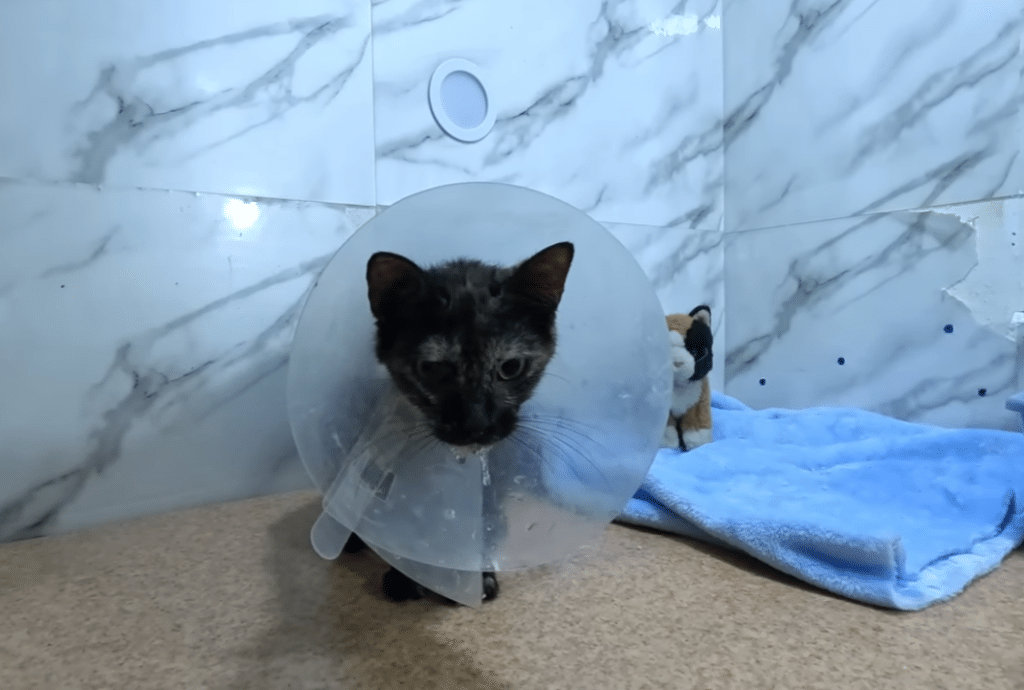
The spay procedure was completed carefully, and Betsy returned home wearing a protective E-collar to prevent her from disturbing the incision site.
She was too weak for dry food, so her caregiver provided vitamins and liquid nutritional supplements through a syringe. Each feeding was slow and patient, allowing her to regain strength gradually.
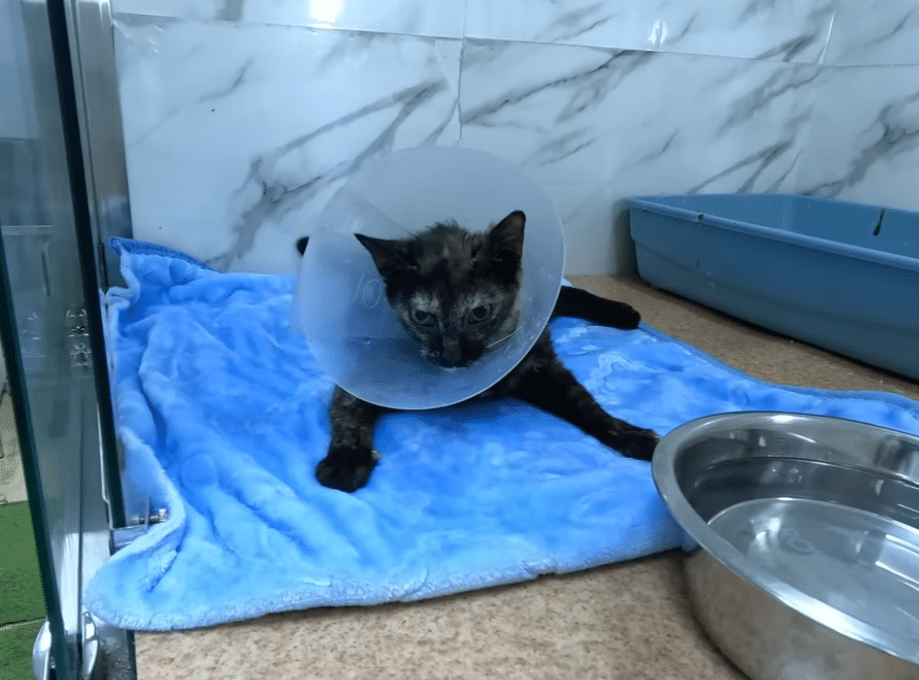
Her stitches were monitored closely. Any discharge was cleaned gently. A veterinarian-approved antiseptic spray — bright blue — was applied carefully to help the incision heal properly.
There was no rushing the process.
Only consistency.
The Quiet Work of Recovery
Betsy now spends most of her time resting.
Her appetite is still limited, but she accepts nutritional support. Her surgical site is healing steadily. The tumors continue to be monitored under veterinary guidance, with hope that early intervention and stabilization will improve her overall outlook.
This is not a dramatic overnight recovery.
It is the slow rebuilding of strength.
It is wiping a bowl clean before every meal.
It is adjusting a collar so it sits comfortably.
It is waking up during the night to check a healing incision.
Most of all, it is staying present.
Hope, Measured in Small Improvements
For now, Betsy’s job is simple:
Rest.
Eat what she can.
Allow her body time to respond.
Her caregiver’s job is equally clear:
Keep her clean.
Keep her nourished.
Keep believing that stabilization can lead to something better.
Some recoveries are loud.
Others are quiet — measured in steady breathing, in a slightly stronger step, in a moment when tired eyes open just a little brighter than the day before.
Betsy is still fighting.
And she is not fighting alone.