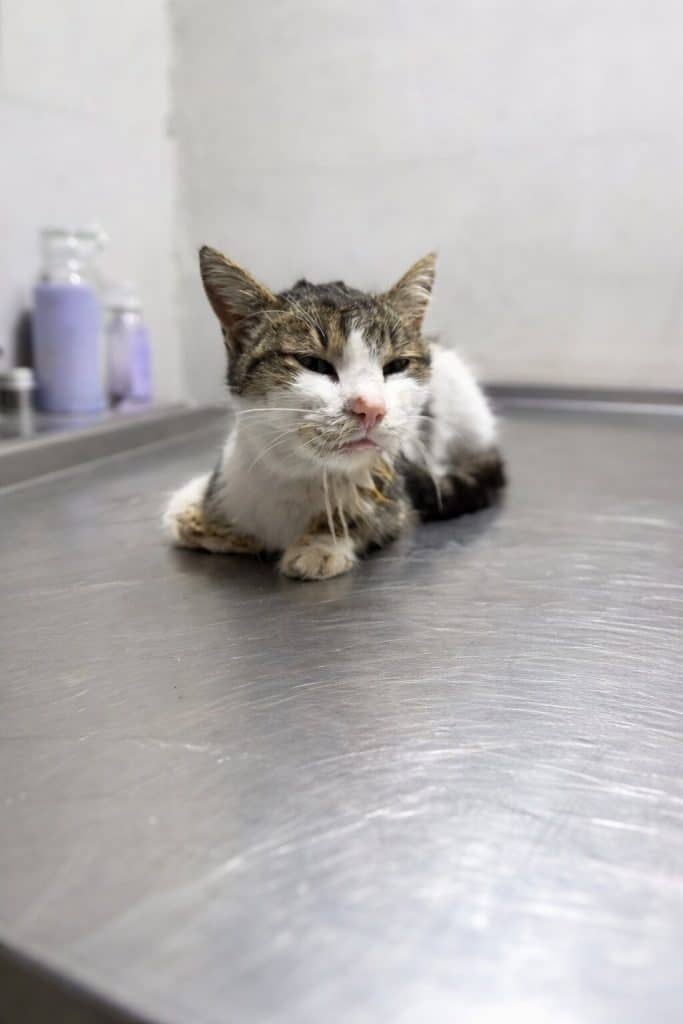
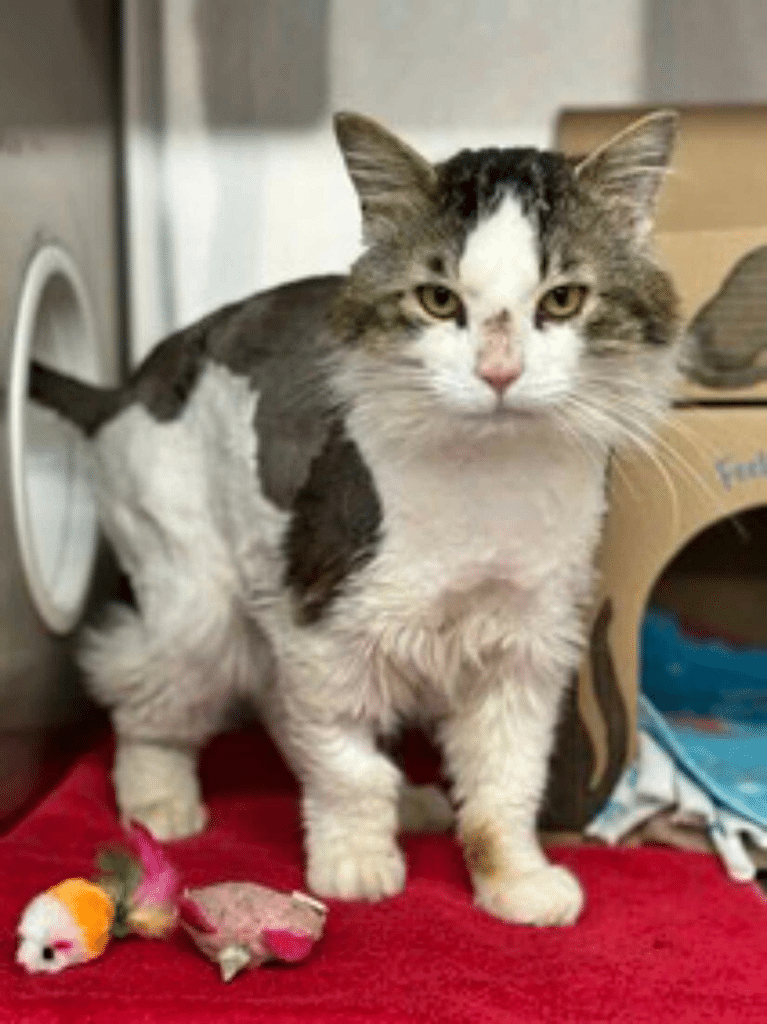
Ricky lies on a cold metal examination table inside a veterinary clinic. His body looks small against the stainless surface. His fur is unkempt and dull. His eyes appear tired — not the curious brightness you expect from a healthy cat.
And from the corner of his mouth, saliva drips steadily.
He doesn’t resist.
He doesn’t struggle.
He just looks… exhausted.
Meet Ricky
Ricky’s condition has raised serious concern.
Excessive drooling in cats is not something to ignore. It can be associated with:
• Severe dental disease
• Oral infections or ulcers
• Toxin exposure
• Neurological issues
• Pain in the mouth or throat
• Nausea or systemic illness
Video: He Couldn’t Even Lift His Head — And the Drool Wouldn’t Stop
When the camera focuses on him, it’s clear something isn’t right.
Ricky lies on a cold metal examination table inside a veterinary clinic. His body looks small against the stainless surface. His fur is unkempt and dull. His eyes appear tired — not the curious brightness you expect from a healthy cat.
And from the corner of his mouth, saliva drips steadily.
He doesn’t resist.
He doesn’t struggle.
He just looks… exhausted.
Meet Ricky
Ricky’s condition has raised serious concern.
Excessive drooling in cats is not something to ignore. It can be associated with:
• Severe dental disease
• Oral infections or ulcers
• Toxin exposure
• Neurological issues
• Pain in the mouth or throat
• Nausea or systemic illness
Combined with his lethargy and poor coat condition, it suggests his body is fighting something significant.
On the Exam Table
The metal table beneath him reflects the bright clinic lights.
Veterinary teams often place weak animals on these surfaces for immediate assessment — checking temperature, heart rate, hydration, gum color, and neurological response.
Ricky lies still during examination.
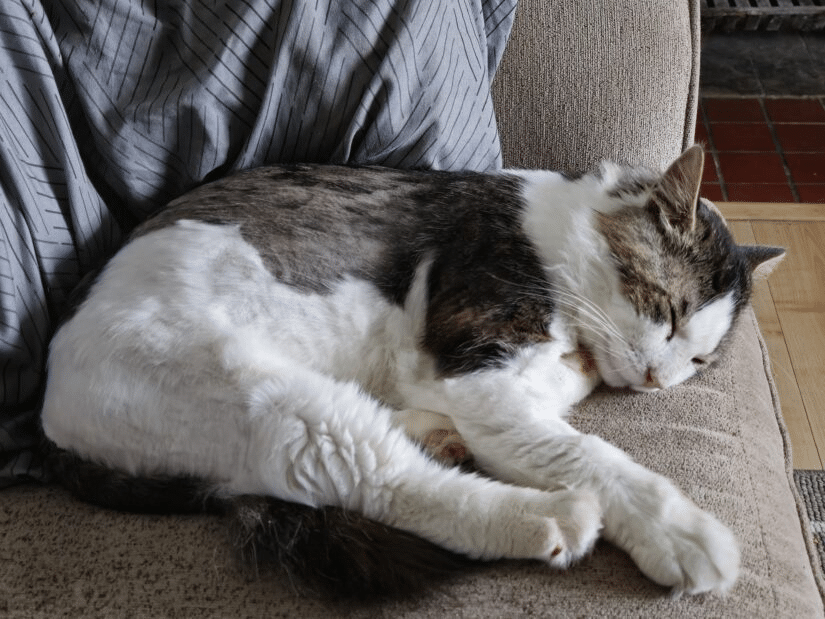
For a cat, that level of passivity can indicate:
- Extreme fatigue
- Dehydration
- Pain
- Or advanced illness
It is not typical calmness.
It is depletion.
Why He Needs Help Now
Drooling combined with weakness can quickly escalate if the underlying cause isn’t treated.
He may require:
• Blood work and diagnostic testing
• Dental or oral examination under sedation
• IV fluids
• Pain management
• Antibiotics or targeted medication
Time matters.
Cats are very good at hiding illness — which means when symptoms become visible, the condition may already be serious.
A Call for Community Support
Ricky is not just another sick cat in a clinic.
He is an animal who still looks toward the people around him, even through discomfort. He hasn’t withdrawn completely. He hasn’t stopped responding.
But he cannot recover alone.
Veterinary diagnostics and treatment can be costly, especially in complex cases involving oral or systemic disease. Community support — whether through sharing his story, offering encouragement, or helping with care resources — can make the difference between prolonged suffering and a real chance at healing.
Right now, Ricky is resting on that cold metal table.
But with timely intervention, warmth could replace steel.
Strength could replace exhaustion.
And the drool that signals distress today… could become just a memory in a healthier tomorrow.
Combined with his lethargy and poor coat condition, it suggests his body is fighting something significant.
On the Exam Table
The metal table beneath him reflects the bright clinic lights.
Veterinary teams often place weak animals on these surfaces for immediate assessment — checking temperature, heart rate, hydration, gum color, and neurological response.
Ricky lies still during examination.
For a cat, that level of passivity can indicate:
- Extreme fatigue
- Dehydration
- Pain
- Or advanced illness
It is not typical calmness.
It is depletion.
Why He Needs Help Now
Drooling combined with weakness can quickly escalate if the underlying cause isn’t treated.
He may require:
• Blood work and diagnostic testing
• Dental or oral examination under sedation
• IV fluids
• Pain management
• Antibiotics or targeted medication
Time matters.
Cats are very good at hiding illness — which means when symptoms become visible, the condition may already be serious.
A Call for Community Support
Ricky is not just another sick cat in a clinic.
He is an animal who still looks toward the people around him, even through discomfort. He hasn’t withdrawn completely. He hasn’t stopped responding.
But he cannot recover alone.
Veterinary diagnostics and treatment can be costly, especially in complex cases involving oral or systemic disease. Community support — whether through sharing his story, offering encouragement, or helping with care resources — can make the difference between prolonged suffering and a real chance at healing.
Right now, Ricky is resting on that cold metal table.
But with timely intervention, warmth could replace steel.
Strength could replace exhaustion.
And the drool that signals distress today… could become just a memory in a healthier tomorrow.