Some animals learn early that the world can be harsh.
John was one of them.
As a stray cat, he knew hunger well. He searched through alleys for scraps, avoided crowded areas where he might be chased away, and endured cold nights without shelter. Survival was his daily routine.
Still, he managed.
Until one night left him unable to move.
Found the Next Morning
By morning, John was lying still.
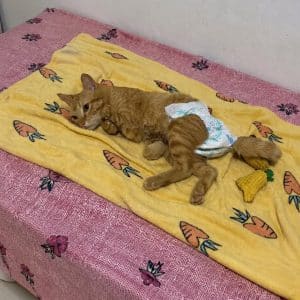
A security guard making rounds noticed him and immediately sensed something was wrong. John could not stand. His back legs would not respond. He was weak, exhausted, and clearly in urgent need of help.
Without delay, the guard transported him to a veterinary clinic.
There, examinations revealed serious trauma. His spine had been fractured, leaving his back legs completely paralyzed. The road ahead would be uncertain and long.
VIDEO: Paralyzed and Broken, John’s Journey Back to His Feet Will Move You
But the team chose not to give up.
Treating More Than Physical Injuries
The veterinarians focused first on stabilization. Pain was managed carefully. Imaging and tests guided a treatment plan. Surgery and long term rehabilitation were discussed.
But there was something else they noticed.
John was wary.
His eyes followed every movement in the room. Sudden sounds made him tense. He had learned not to trust easily.
So healing had to happen on two levels.
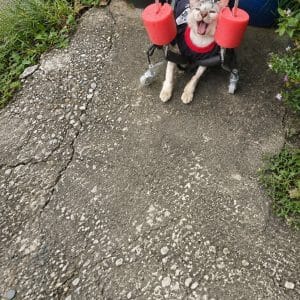
Physical therapy began slowly. Assisted exercises helped maintain circulation and muscle strength. Volunteers sat beside him quietly, allowing him to grow accustomed to gentle hands and calm voices.
Trust does not return all at once.
It builds in small moments.
The Long Road of Rehabilitation

Weeks turned into months.
There were days of progress and days of discouragement. John required consistent therapy to stimulate nerve response and rebuild strength. He was supported while standing. Encouraged to shift weight. Guided carefully through assisted steps.
Then came a small breakthrough.
A faint movement in one hind leg.
It was subtle, but it meant possibility.
The team celebrated quietly and kept going.
More therapy.
More patience.
More encouragement.
Over time, those faint movements grew stronger. John began placing slight pressure on his back legs. With support, he stood for a few seconds. Then longer.

Years of consistent care followed.
And one day, he walked forward on his own.
A Life Reclaimed
The cat who once lay unable to move eventually regained his ability to walk and even run. His body, once still, responded again with strength and balance.
Perhaps even more remarkable was the change in his spirit.
The wary stray who once watched every hand with suspicion began leaning into touch. He allowed affection. He sought companionship.
The world that had once felt unsafe slowly became different.
Today, John moves like any healthy cat. He explores confidently. He rests comfortably. He lives without the constant fear he once knew.
His story is not defined by the night he was injured.
It is defined by what followed.
Dedication.
Rehabilitation.
Unwavering compassion over time.
John reminds us that recovery is rarely quick.
But with patience and consistent care, even the most difficult journeys can lead back to strength.