Some rescues don’t begin with dramatic moments.
They begin with someone choosing to stop.
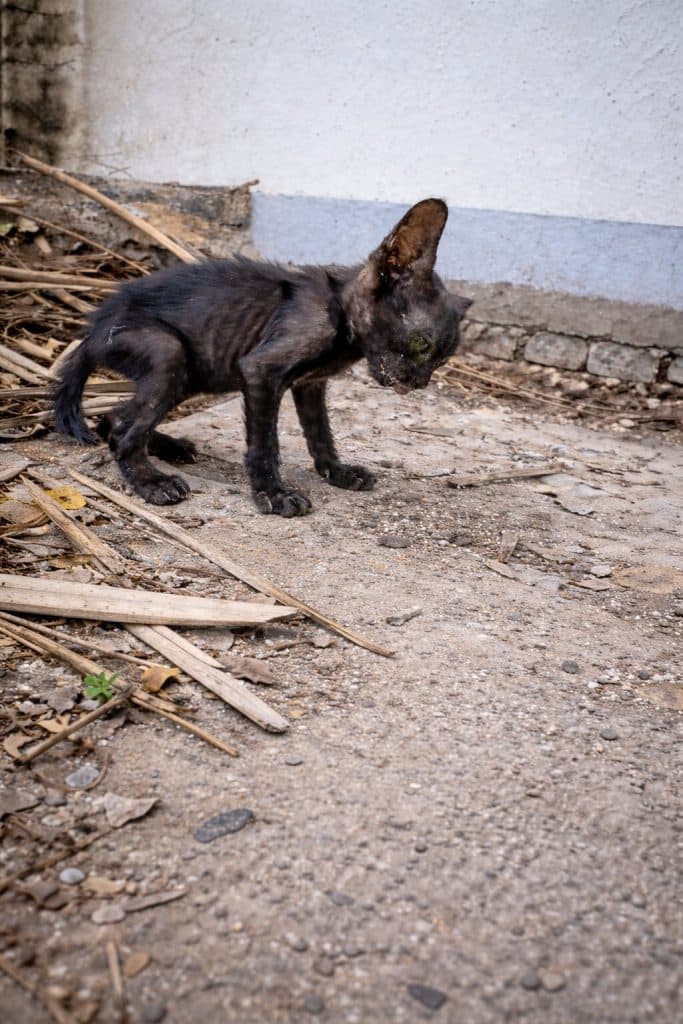
On a quiet roadside scattered with broken bricks and discarded debris, a woman who regularly feeds stray cats noticed something unusual. Beneath the rubble, barely visible against the shadows, a small black cat was curled tightly into himself.
He wasn’t resting.
He was hiding.
His body was painfully thin, little more than bones beneath fragile fur. Every sound made him flinch. When she stepped closer, he hissed, not out of aggression, but fear. Fear had been his only protection for a long time.
He had learned that survival meant staying invisible.
But that day, someone saw him.
The Slow Work of Earning Trust
She didn’t rush toward him.
She didn’t try to grab him.
VIDEO: The Tiny Black Cat Hiding in Rubble Finally Learned What Gentle Hands Feel Like
Instead, she sat down a short distance away and spoke softly, as if addressing an old friend. Her voice was calm and steady, carrying no urgency, only reassurance.
At first, he pressed himself deeper into the rubble.
She placed a small dish of food nearby and moved back.
Hunger is powerful.
But fear is stronger.
Minutes passed. Then more.
Eventually, the tiny black cat stretched his neck forward. He retreated at the slightest movement. Each step toward the food was followed by two steps back toward safety.
It was a quiet dance between caution and hope.
Day after day, she returned.
Same gentle voice.
Same patient distance.
Same promise of food.
And slowly, something changed.
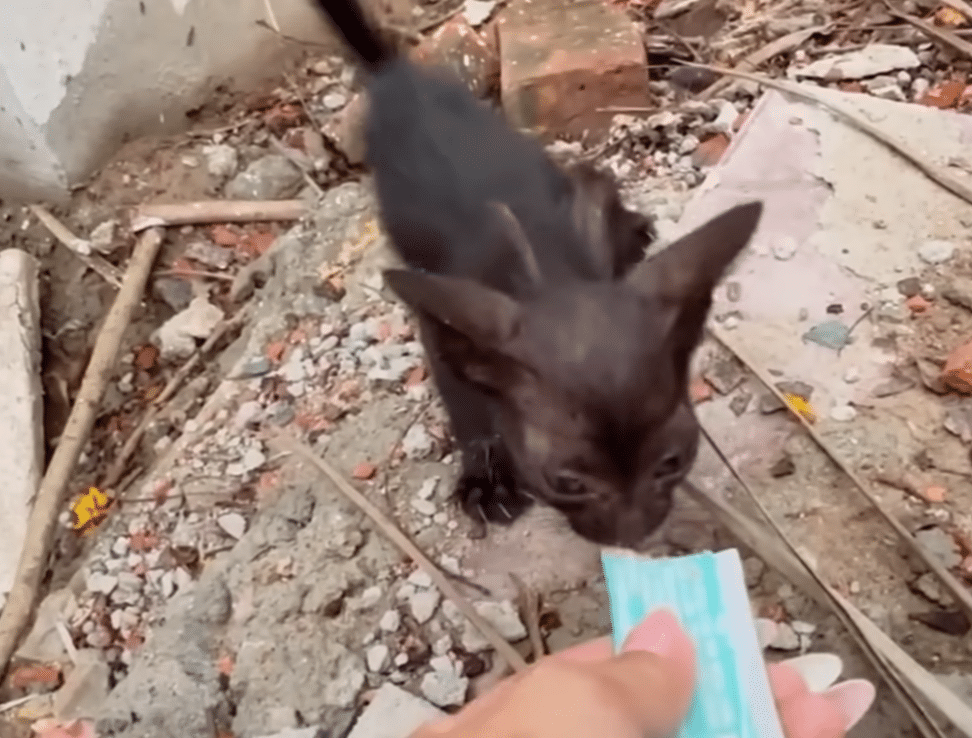
His hissing softened.
His eyes stayed on her a little longer.
His body no longer trembled quite as violently.
Trust wasn’t given.
It was built, moment by moment.
When Fear Gave Way to Hunger and Hope
The day he allowed her to come close enough to touch him, she realized just how fragile he truly was.
Under her careful fingers, she could feel every rib. His frame was shockingly light. He had been surviving, but only barely.
She didn’t hesitate.
Wrapping him gently in a soft cloth, she lifted him from the only shelter he had known, broken bricks and roadside waste.
For the first time in a long time, he wasn’t hiding.
He was being held.
And he didn’t fight.
The Quiet Healing That Followed
At home, the transformation began not with anything dramatic, but with warmth.
Warm water replaced cold pavement.
Clean towels replaced dust.
Soft lighting replaced harsh daylight.
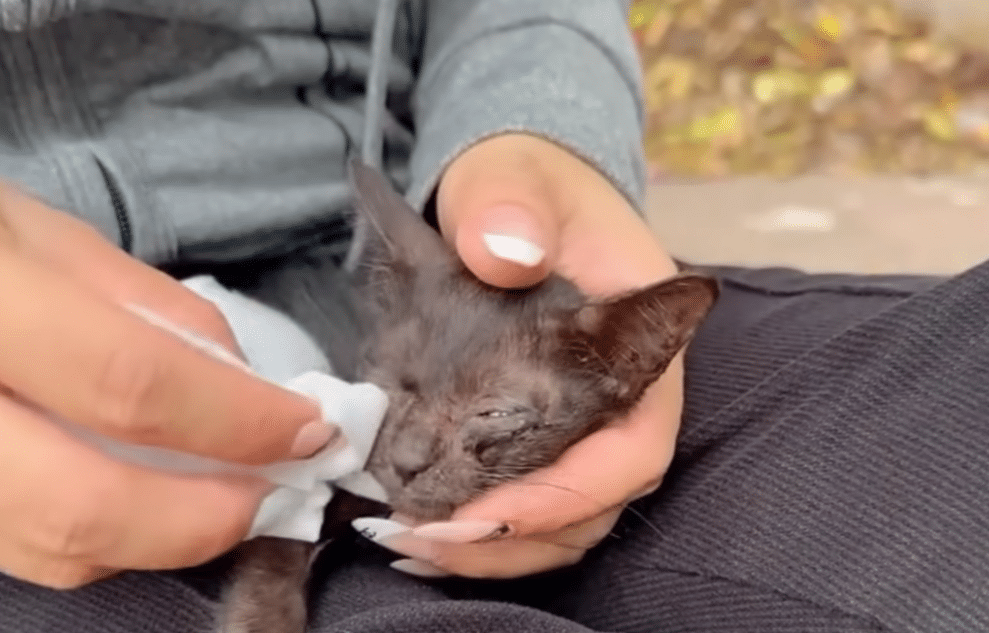
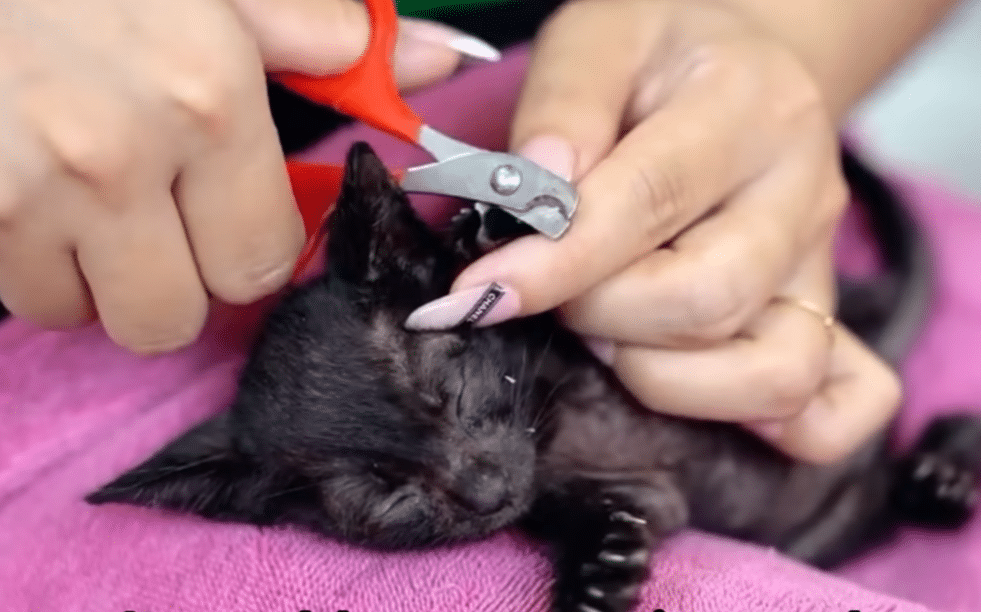
She bathed him carefully, rinsing away layers of dirt. She wiped his eyes so he could see clearly. She cleaned his ears and trimmed his nails, easing the discomfort he had silently endured.
He was too tired to resist.
But he was not too tired to feel.
With every gentle movement, his body relaxed a little more. The defensive tension he carried like armor began to loosen.
Then came the most important step, nourishment.
Small portions. Slow feeding. Patience.
Over the following days, his appetite returned. His posture shifted. His eyes, once wide with alarm, began to soften.
One evening, while resting in her lap, he didn’t curl into a defensive ball.
He stretched.
And closed his eyes.
It was the first sign that he felt safe.
More Than a Rescue
The tiny black cat who once hid in rubble now rests peacefully in loving arms.
His body is still recovering. Weight will take time to return. Strength will build gradually.
But the most important healing has already begun.
He no longer hides from kindness.
He leans into it.
A Gentle Reminder
There are countless animals who live quietly on the margins, unseen, unheard, surviving however they can.
Sometimes rescue doesn’t require grand gestures.
It begins with pausing.
With speaking softly.
With offering food and patience instead of fear.
This small black cat’s story is a reminder:
Compassion is powerful.
Trust can grow even in the most frightened hearts.
And sometimes, the greatest change begins with a single gentle voice saying, “It’s okay now.”
Because of one woman’s kindness, a life once hidden in rubble now rests in safety.
And that changes everything.