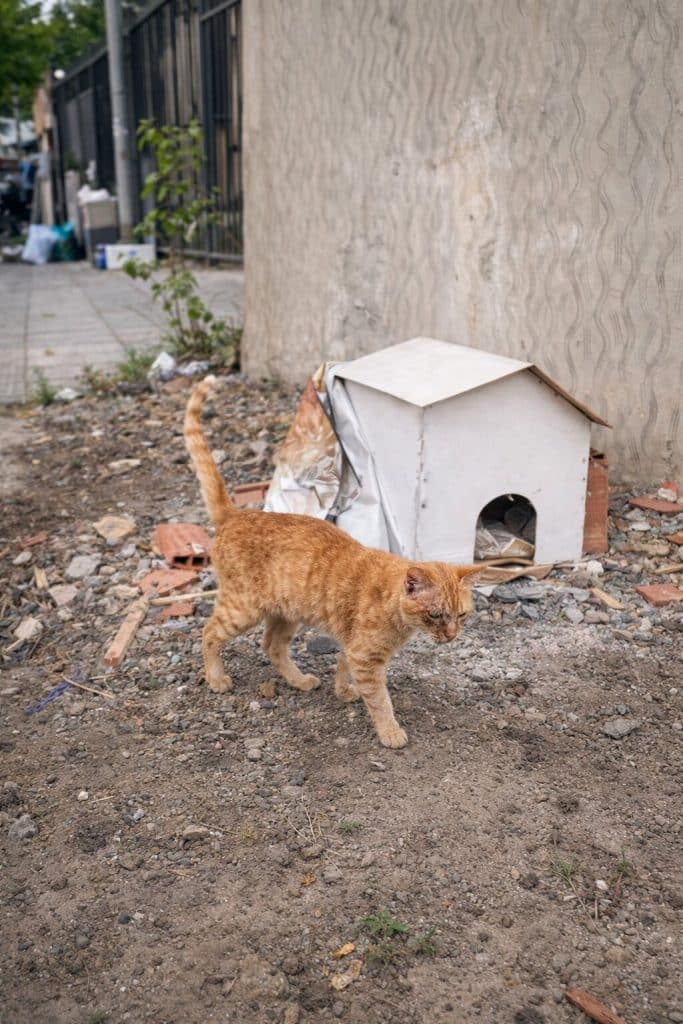
When Simba was first seen, it was his eye that drew attention.
Swollen.
Severely damaged.
Painful even to look at.
But it was his expression that stayed with the rescuers.
He didn’t behave like a cat who had completely given up on people.
He stepped forward — then stepped back.
He leaned in — then hissed.
He wanted connection… yet feared it at the same time.
Pain does that.
It confuses trust.
Earning Trust, One Small Step at a Time
Simba didn’t allow anyone to approach easily. Every movement near him triggered caution. His body tensed, ready to defend himself if necessary.
VIDEO: One Eye Beyond Saving — Watch How Simba Began to Trust the Hands That Would Heal Him
So the rescuers slowed everything down.
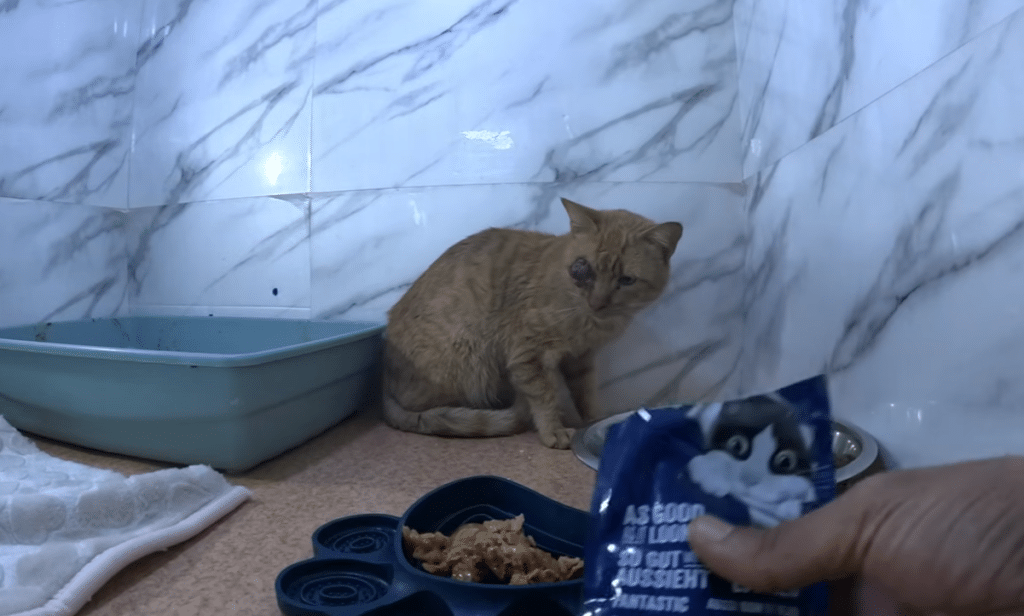
Soft food was placed nearby. No reaching. No forcing.
At first, he watched from a distance. Then hunger gently overruled hesitation. He moved closer, eyes fixed carefully on the humans around him.
One bite turned into several.
The distance shortened.
Eventually, when the carrier door was opened, Simba — still wary — was guided safely inside.
It wasn’t dramatic.
It was patient.
What the Veterinarian Confirmed
At the clinic, a thorough examination revealed the extent of the damage.
The injured eye could not be saved.
The surrounding tissue was inflamed and unstable, requiring a week of antibiotic treatment to reduce infection before surgery could safely be performed. The goal was stabilization first — then removal of the damaged eye to prevent further pain.
It was not an easy diagnosis.
But it was a clear path forward.
The road ahead would require both medical care and emotional reassurance.
A Quiet Room Just for Him
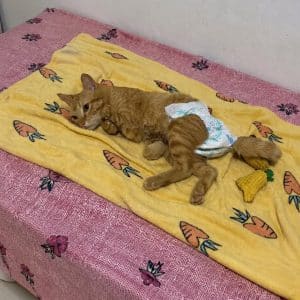
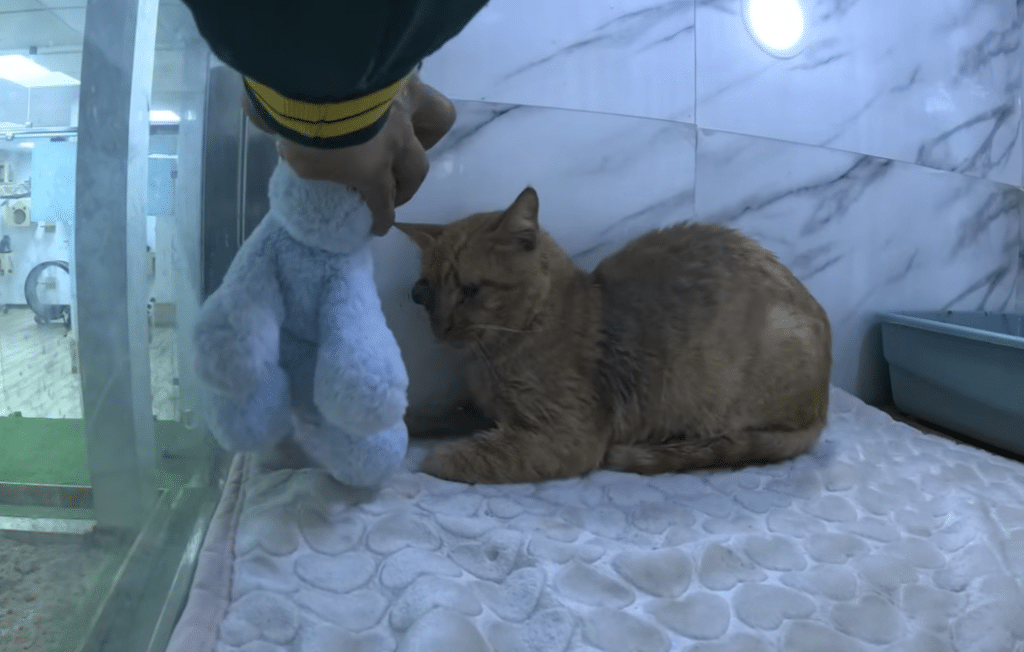
After his initial treatment, Simba was brought to a separate recovery room at the rescue station.
There, he found something unfamiliar:
Consistency.
A clean bed.
Fresh water.
Regular meals.
A small stuffed toy placed beside him for comfort.
The room was calm, free from sudden noise or crowded spaces. For a cat adjusting to both injury and change, stability matters.
The Hardest Part: Daily Treatment
Administering antibiotics and cleaning the wound proved challenging.
Simba resisted.
He pulled away.
He tensed.
He protested loudly.
Not because he was ungrateful.
But because he was afraid.
The caregivers understood that fear is not defiance — it is memory. So they remained steady. Gentle. Reassuring. Each day, the process became slightly easier. Not effortless — but possible.
And with every completed dose of medication, his body grew stronger.
Waiting for a New Beginning
Now, Simba’s infection is stabilizing. His appetite has improved. He spends more time resting peacefully rather than pacing in uncertainty.
He is still cautious.
But he no longer lashes out immediately.
He watches.
He listens.
He allows touch for longer stretches.
Soon, he will undergo surgery to remove the damaged eye — a procedure meant not to take something away, but to give him comfort and a pain-free future.
The rescue team has made a clear promise:
He will receive everything he needs.
He will not face surgery alone.
He will be supported until he is ready for a home that sees beyond what he lost.
Because healing is not just about saving an eye.
It is about restoring safety.
And Simba — brave, conflicted, resilient Simba — is slowly learning that this time, the hands reaching toward him are here to help.