The emergency call came in quickly.
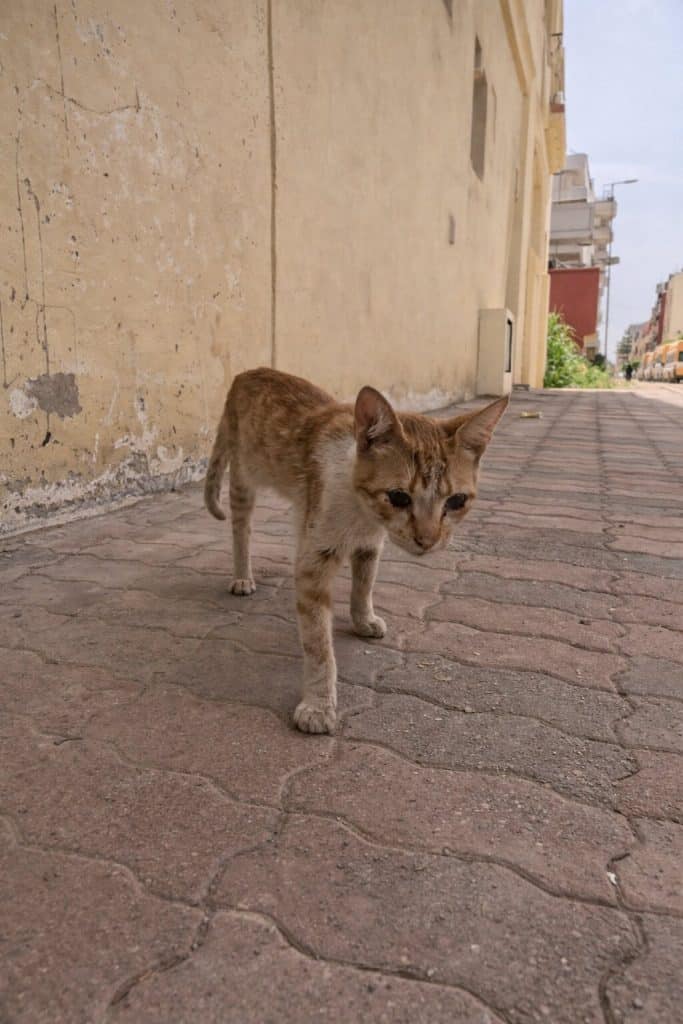
A cat was wandering near the street, disoriented and injured.
When rescuers arrived, they found a yellow-and-white cat moving unsteadily along the roadside. His steps were uneven, his balance uncertain. It became clear almost immediately that he could not see.
He wasn’t running.
He wasn’t hiding.
He was simply trying to move forward in a world that had suddenly gone dark.
Injuries That Couldn’t Be Ignored
Closer examination revealed more.
A serious wound on his leg had developed complications and required urgent care. His vision loss and balance issues were consistent with trauma, possibly from a vehicle accident. Every step he took was an act of effort.
VIDEO: Blind and Injured After an Accident — Watch How He Responded to His First Gentle Touch
And yet — he remained calm.
When approached, he did not lash out. He did not panic. He allowed himself to be gently lifted into a carrier, as if sensing that resistance would only cost him more energy.
He was tired.
But he was trusting.
Immediate Medical Attention
At the veterinary clinic, the team worked carefully.
His eyes were examined.
His mouth was checked for additional injury.
The wound on his leg was shaved, cleaned, disinfected, medicated, and properly bandaged.
Despite everything, he stayed remarkably cooperative. He flinched at moments, but he did not fight. It was as though he understood that these unfamiliar hands were trying to help.
The focus was stabilization first — then recovery.
A Space Designed for Safety
After treatment, he was transferred to a modern rescue center specializing in feline care.
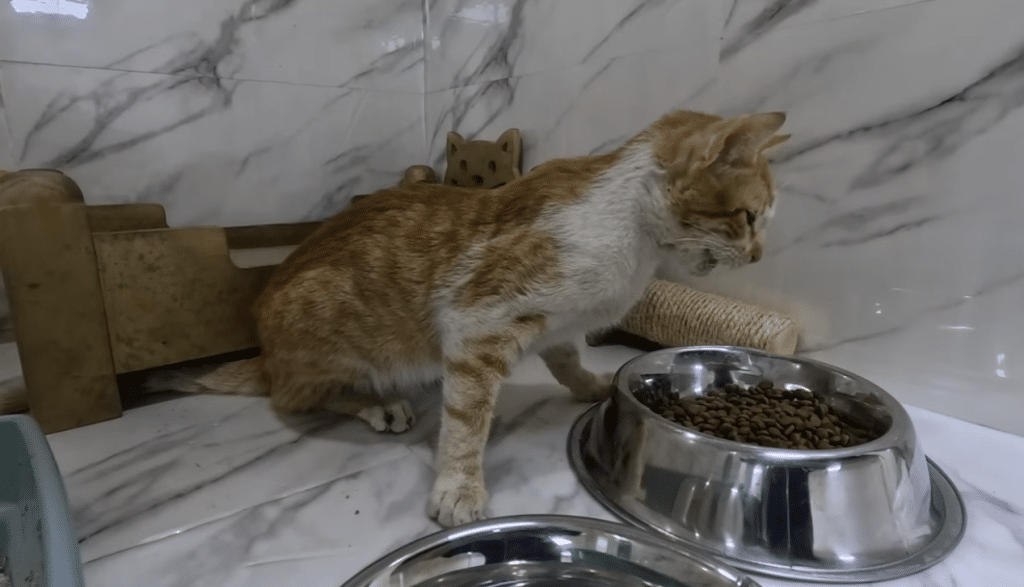
There, he was placed in a clean, glass-front enclosure of his own — quiet, bright, and carefully arranged.
Fresh food and water were always within reach.
A litter box was positioned nearby.
A small wooden bed gave him a place to rest securely.
For a cat adjusting to vision loss, consistency matters more than space. Everything remained in the same place, allowing him to learn his surroundings slowly.
Day Two: Small Steps That Meant Everything
By the second day, something encouraging happened.
His appetite improved.
He began eating with focus and interest, regaining strength. Carefully, he started exploring his enclosure — mapping it through memory and touch rather than sight.
He walked.
He paused.
He adjusted.
Then, to the surprise of caregivers, he managed to climb onto the small wooden steps inside his space. Slowly. Deliberately. But independently.
It wasn’t dramatic.
But it was brave.
Learning That Darkness Isn’t the End

Most remarkable of all was his response to affection.
When rescuers reached in gently, he leaned toward their hands. He pressed his head into their touch. He purred — soft, steady, and sincere.
He no longer seemed frightened.
He seemed relieved.
Blindness may have changed how he experiences the world. But it has not taken away his ability to trust, to adapt, or to feel safe.
The rescue team is committed to providing ongoing medical care for his leg and helping him adjust fully to life without sight. With time, stability, and patience, blind cats often navigate beautifully — guided by scent, sound, and memory.
Today, he rests in comfort.
He eats well.
He climbs carefully.
He leans into kindness.
He may not see the hands that reach for him.
But he knows they are there.
And sometimes, that is enough.