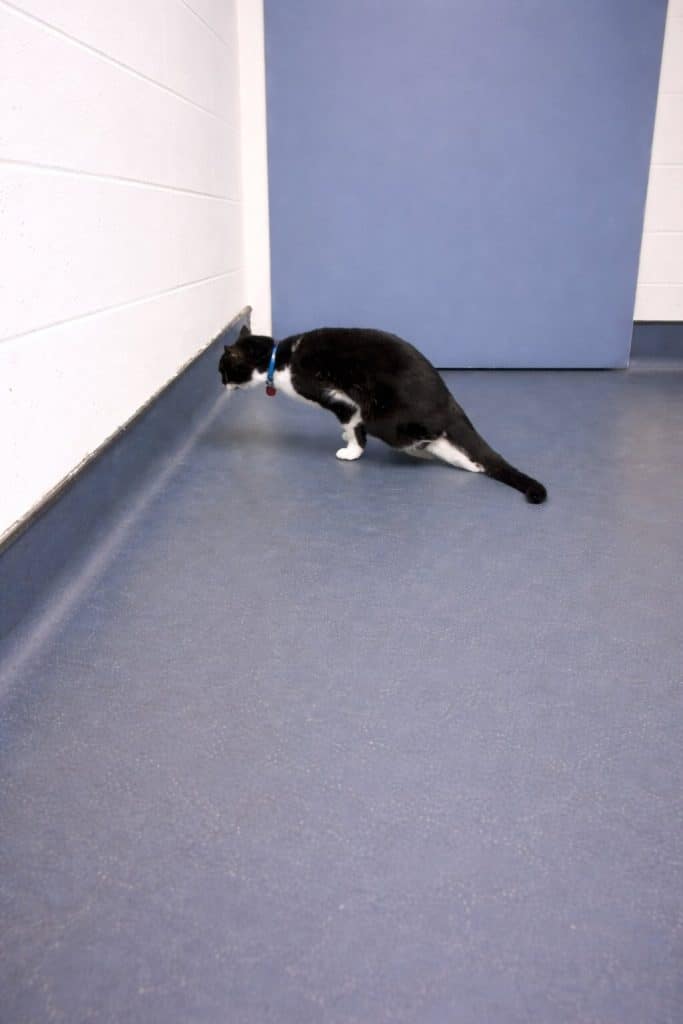
At first glance, he looked like any other black-and-white tuxedo cat.
Bright eyes.
Soft fur.
Alert expression.
But the moment he was gently placed on the floor, something was wrong.
His front paws steadied him.
His back legs did not.
A Body That Wouldn’t Cooperate
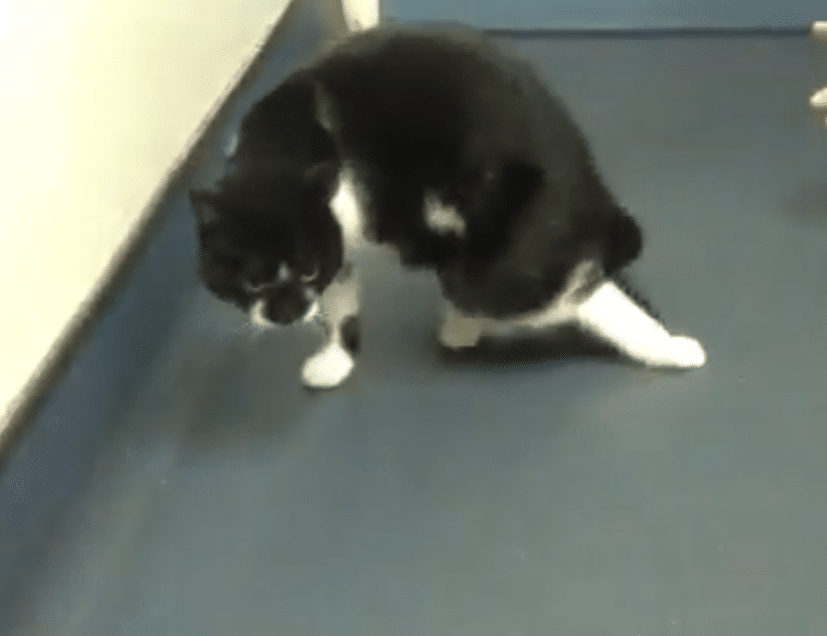
When he attempted to walk, his hind legs failed to support him. They appeared extremely weak — possibly paralyzed — unable to bear even a small portion of his weight.
He tried anyway.
He pushed forward with his front legs, dragging the lower half of his body behind him. Each short movement required effort. Each attempt ended the same way.
After only a few steps, he sank down onto the floor, sitting heavily because his back legs could no longer hold him upright.
VIDEO: His Back Legs Wouldn’t Respond — Watch His Determined Effort to Take Just a Few Steps
He didn’t cry out.
He simply stopped.
The Quiet Frustration of Losing Strength
Cats are naturally graceful. They climb, leap, balance effortlessly.
For one who suddenly cannot stand, the confusion can be as difficult as the physical limitation.
He looked at the floor.
He adjusted his paws.
He attempted again.
But his hind legs remained unresponsive.
There are many possible causes for symptoms like these — spinal injury, nerve damage, congenital conditions, or other neurological concerns. Only thorough veterinary evaluation can determine the exact reason.
What is clear is that he needs support.
When Mobility Changes, Care Must Change Too
A cat experiencing severe hind-leg weakness requires:
• Immediate veterinary assessment
• Monitoring for pain or neurological progression
• A safe, non-slip environment
• Assistance with hygiene if mobility remains limited
With early intervention, some cats regain partial or even full function depending on the cause. Others adapt remarkably well with supportive care and mobility assistance.
This is not a story of failure.
It is a story of resilience.
More Than His Limitations
What stands out most is not what he cannot do.
It is that he keeps trying.
He does not understand diagnosis or prognosis. He only understands instinct — to move forward.
And while his hind legs may not carry him today, compassionate care can.
Because sometimes strength is not measured by how far you walk —
But by the courage to try again, even after you fall.