He wasn’t refusing to move.
He couldn’t.
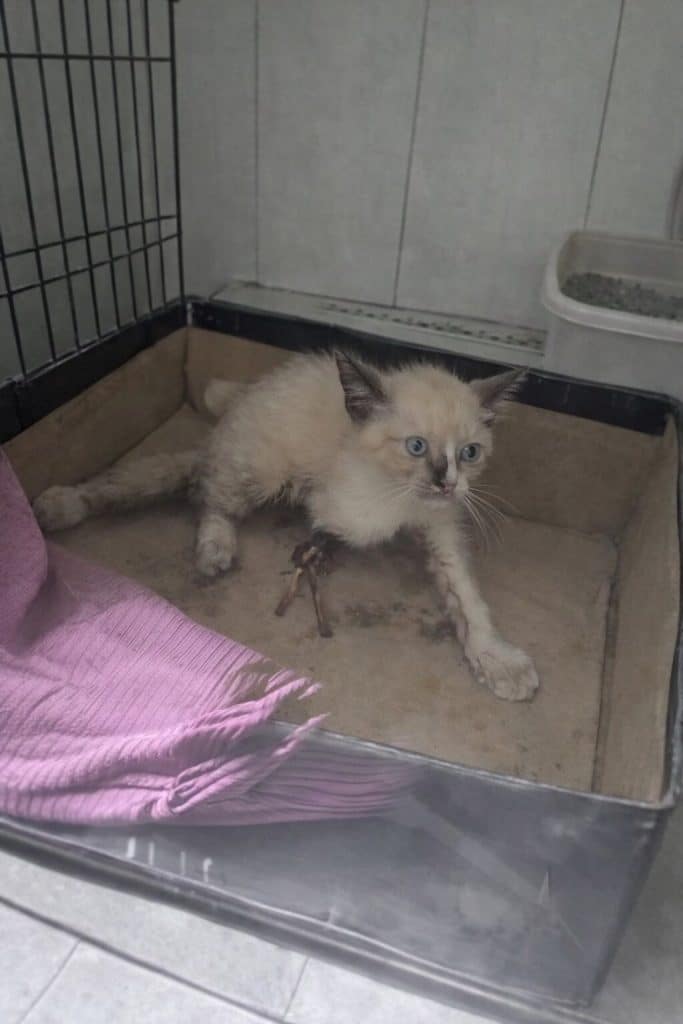
Inside a simple cardboard box, the cat lay quietly, his body small against the worn edges of the paper walls. His eyes looked tired — not from laziness, but from pain.
His back legs rested awkwardly behind him.
Something was terribly wrong.
Not “Lazy” — But Seriously Injured
At first glance, some might assume he simply didn’t want to stand.
But medical evaluation revealed the heartbreaking truth: he had suffered a shattered hip.
A fractured pelvis is an extremely painful injury. It can happen due to trauma such as a car accident or a heavy impact. When the hip bone is broken into multiple pieces, normal movement becomes nearly impossible.
Standing hurts.
Shifting hurts.
Even trying to reposition his body causes strain.
Video: They Thought He Was Lazy — But The Truth Was Much More Painful
What looks like reluctance is often survival instinct — conserving energy to cope with severe pain.
A Body That Can’t Support Itself
In the image, his hind legs appear visibly compromised. They don’t tuck naturally beneath him. They don’t push against the ground.
Instead, they lie still.
His body looks fragile, as if any sudden movement would cause more damage.
And yet, his eyes remain alert — quietly watching the world around him.
The Pain Behind the Stillness
Hip fractures in cats often require:
• Immediate pain management
• Diagnostic imaging (such as X-rays)
• Strict confinement to prevent further injury
• In severe cases, surgical repair
Without treatment, complications can include chronic pain, improper bone healing, or permanent mobility issues.
So no — he isn’t lazy.
He is injured.
Deeply.
More Than What We See
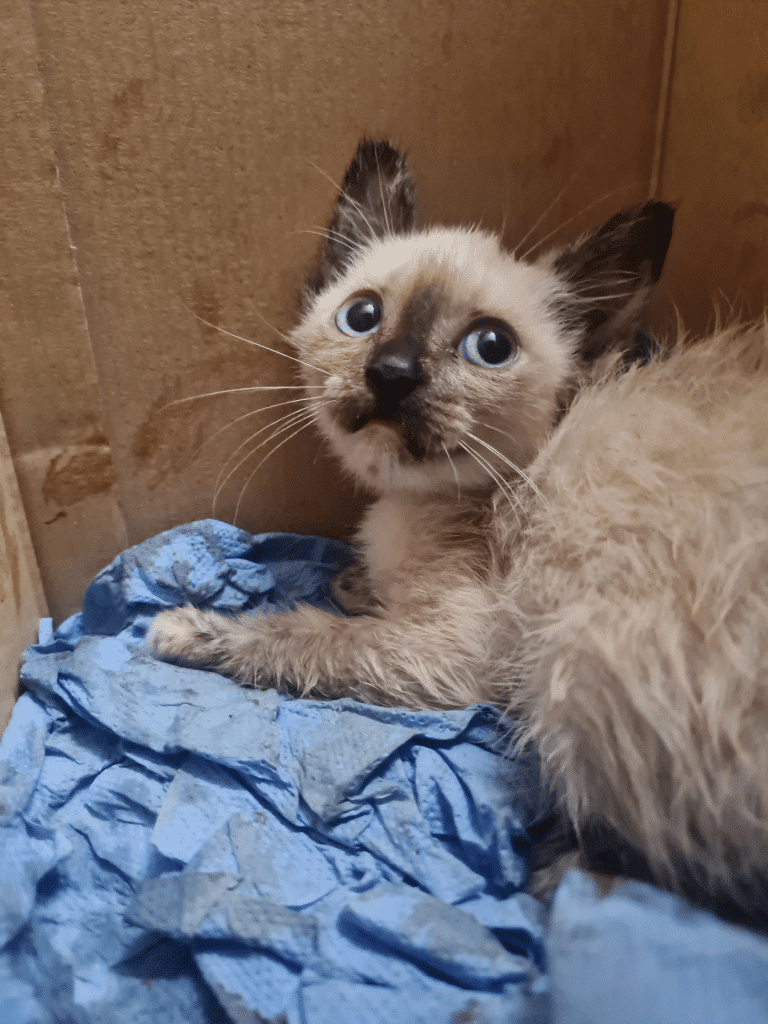
There is something especially heartbreaking about how still he looks inside that cardboard box.
As if he has already learned that movement brings pain.
As if staying quiet feels safer.
But stillness does not mean surrender.
It means his body is trying to cope.
A Chance to Heal
With proper veterinary care, many cats with pelvic fractures can recover — sometimes even without surgery if the fracture is stable and carefully managed.
Healing takes time.
Rest.
Gentle monitoring.
Patience.
And compassion.
Because behind those sad eyes is not a “lazy” cat.
It is a cat in pain — waiting for someone to understand that he isn’t choosing not to move.
He simply needs help to stand again.