The small cat couldn’t stop moving his tongue.
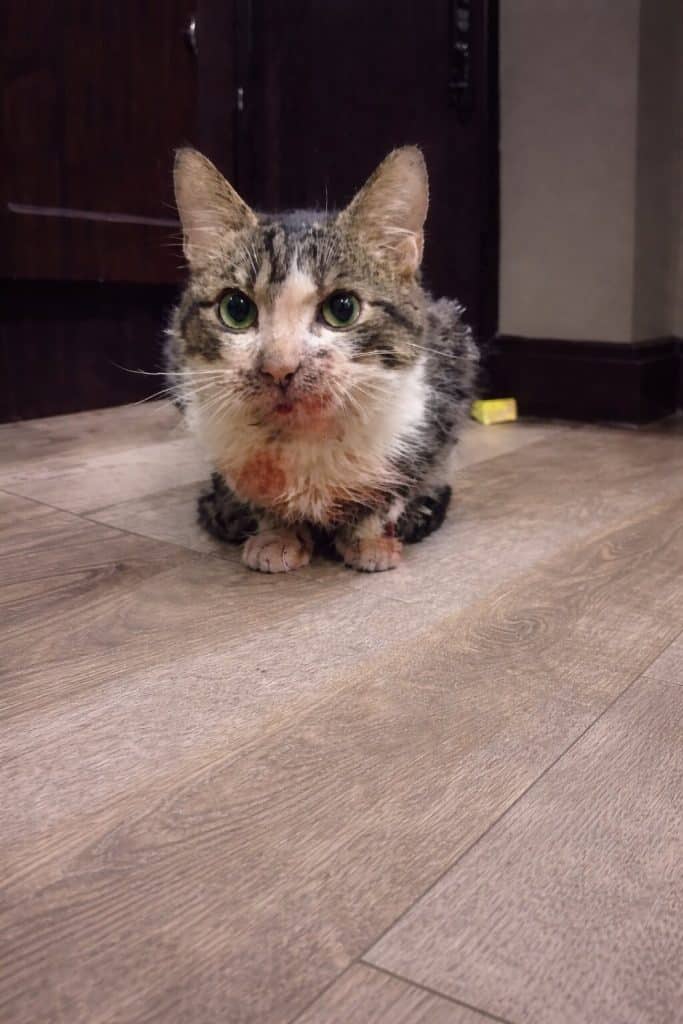
Over and over, he licked at his mouth — confused, uncomfortable, and clearly in pain. Blood stained the fur around his lips. His once-soft coat was now dirty and matted, especially around his face.
Something was terribly wrong.
One of his teeth had pierced into his tongue. Every time he tried to close his mouth, chew, or swallow, the sharp edge pressed deeper into sensitive tissue.
Eating became painful.
Drinking became difficult.
Even resting wasn’t easy.
And yet, he kept trying.
A Silent Struggle With Every Bite
Oral injuries in cats are especially distressing.
Unlike a visible limp or wound on a leg, mouth injuries interfere with basic survival functions. When a tooth embeds into the tongue or soft tissue, it can cause:
VIDEO: He Couldn’t Eat Without Bleeding — Watch How He Keeps Trying Anyway
• Continuous bleeding
• Swelling and inflammation
• Infection risk
• Severe discomfort while eating
• Dehydration due to avoidance of drinking
The repeated licking wasn’t just grooming — it was instinct. He was trying to soothe pain he didn’t understand.
If you look closely, you’ll notice how carefully he moves his jaw, as if afraid of triggering the pain again.
Why This Condition Can Become Dangerous Quickly
When a cat cannot eat properly, the body weakens fast.
Within days, dehydration and nutritional deficits can worsen an already fragile condition. Blood loss, even in small amounts but continuously, adds further strain.
And mouth injuries often require professional intervention — sometimes dental extraction or repositioning of damaged teeth.
This is not something that resolves on its own.
More Than Just a Wound
What makes it harder to watch is not just the blood.
It’s his size.
His dirty fur.
The way he looks up with wide, uncertain eyes.
He doesn’t understand why food hurts.
He doesn’t understand why his tongue won’t heal.
He only knows that something feels wrong.
A Team Refusing to Look Away
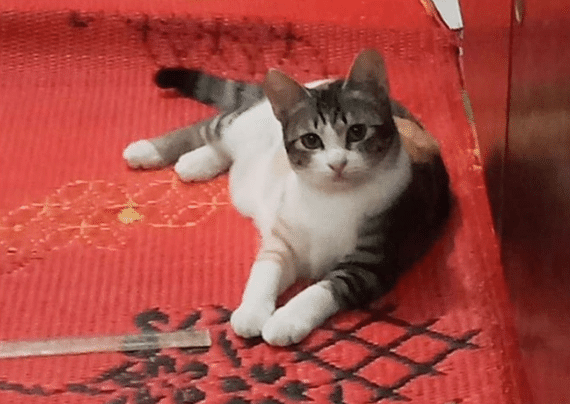
Thankfully, people stepped in.
They are doing everything possible to stabilize him and seek veterinary care. Oral examinations, pain management, and potential corrective procedures are being considered.
Because without help, his condition would only worsen.
With help, there is a real chance for relief.
The Moment That Matters Most
Pain can make animals withdraw.
But sometimes, it also becomes the reason someone notices.
Right now, he is still fragile.
Still hurting.
Still needing intervention.
But he is no longer suffering unseen.
And sometimes, the first step toward healing isn’t the surgery.
It’s the decision that his pain matters enough to fight for.