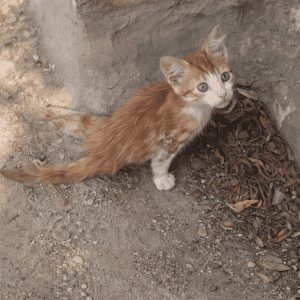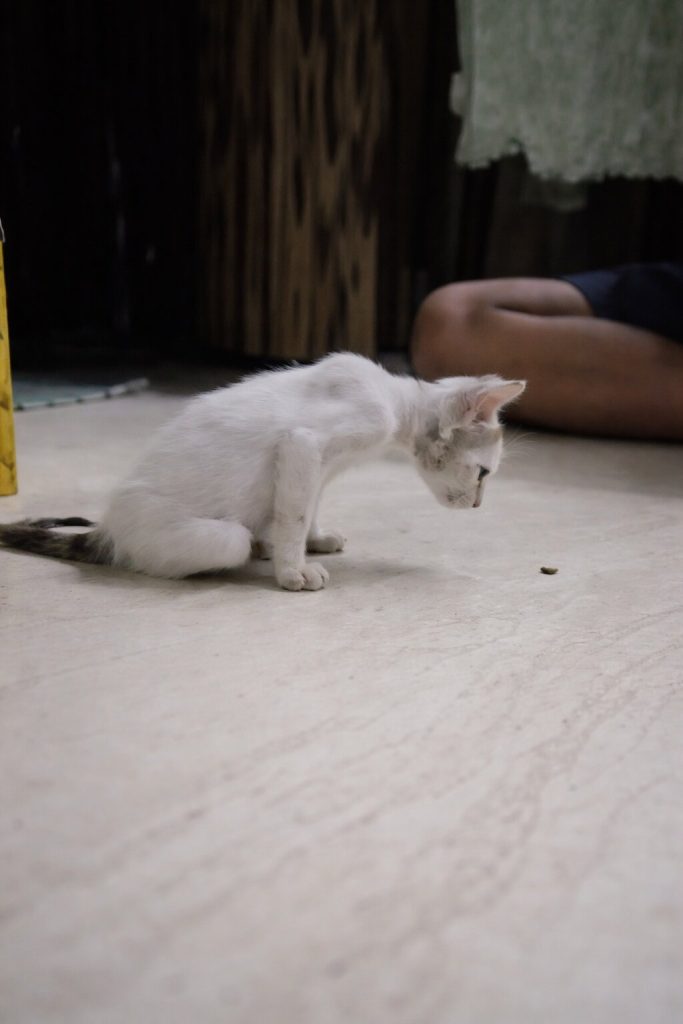
The tiny white kitten tried to move forward… but his back legs wouldn’t follow.
They dragged behind him, unable to support his weight.
Each attempt looked difficult, slow, and uncertain.
But still, he tried.
A Gentle Way to Encourage Him
Nearby, someone stayed close—patient and calm.
Instead of forcing movement, they used something simple: food.
Placed just within reach, it became a quiet motivation.
Step by step, the kitten tried to move forward, even if only a little at a time.
Understanding What He Needed
His condition suggested a deeper issue—something affecting his nerves and coordination.
Video: Paralyzed Kitten Learns to Move Again with Gentle Support and Care
Because of that, supportive care was introduced to help his body respond better over time.
The goal wasn’t quick results.
It was steady progress.
A Supportive Treatment Plan
To help improve nerve function, nutritional support was recommended.
Caregivers introduced nerve-support supplements, given in small, consistent amounts each day.
The approach was simple:
gentle care, regular routine, and patience.
Progress That Takes Time
Recovery in cases like this doesn’t happen overnight.
It requires consistency—small efforts repeated daily.
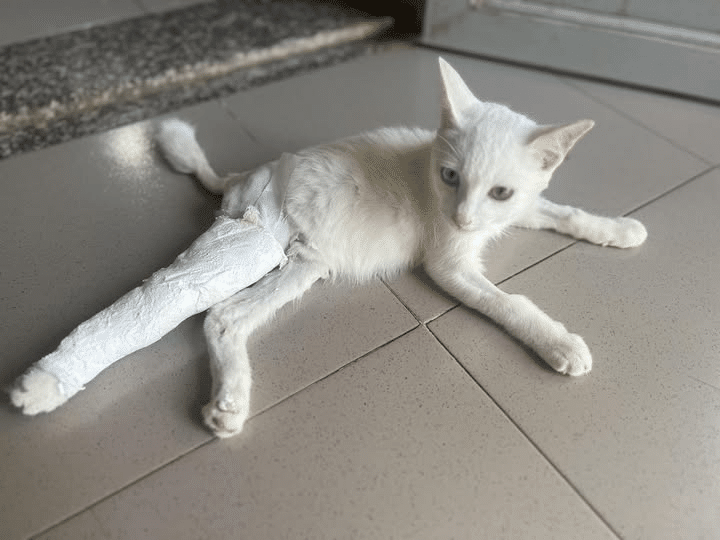
Encouraging movement, maintaining comfort, and supporting the body as it slowly adapts.
Each small attempt matters.
More Than Just Movement
Even when progress feels slow, something important is already happening.
The kitten is trying.
And with each attempt, he is learning—adjusting, responding, building strength in his own way.
A Gentle Reminder About Patience and Care
Some journeys take longer than others.
They require time, understanding, and a willingness to stay present through every small step.
Because sometimes, the most meaningful progress…
is simply not giving up.